RC aircraft
A foam hand-launch glider I rebuilt as a GPS-equipped INAV aircraft: Matek F411-WTE, ExpressLRS telemetry, a self-built 18650 pack and a printed bay fitted to a scan of the fuselage. I flew it in August 2024.
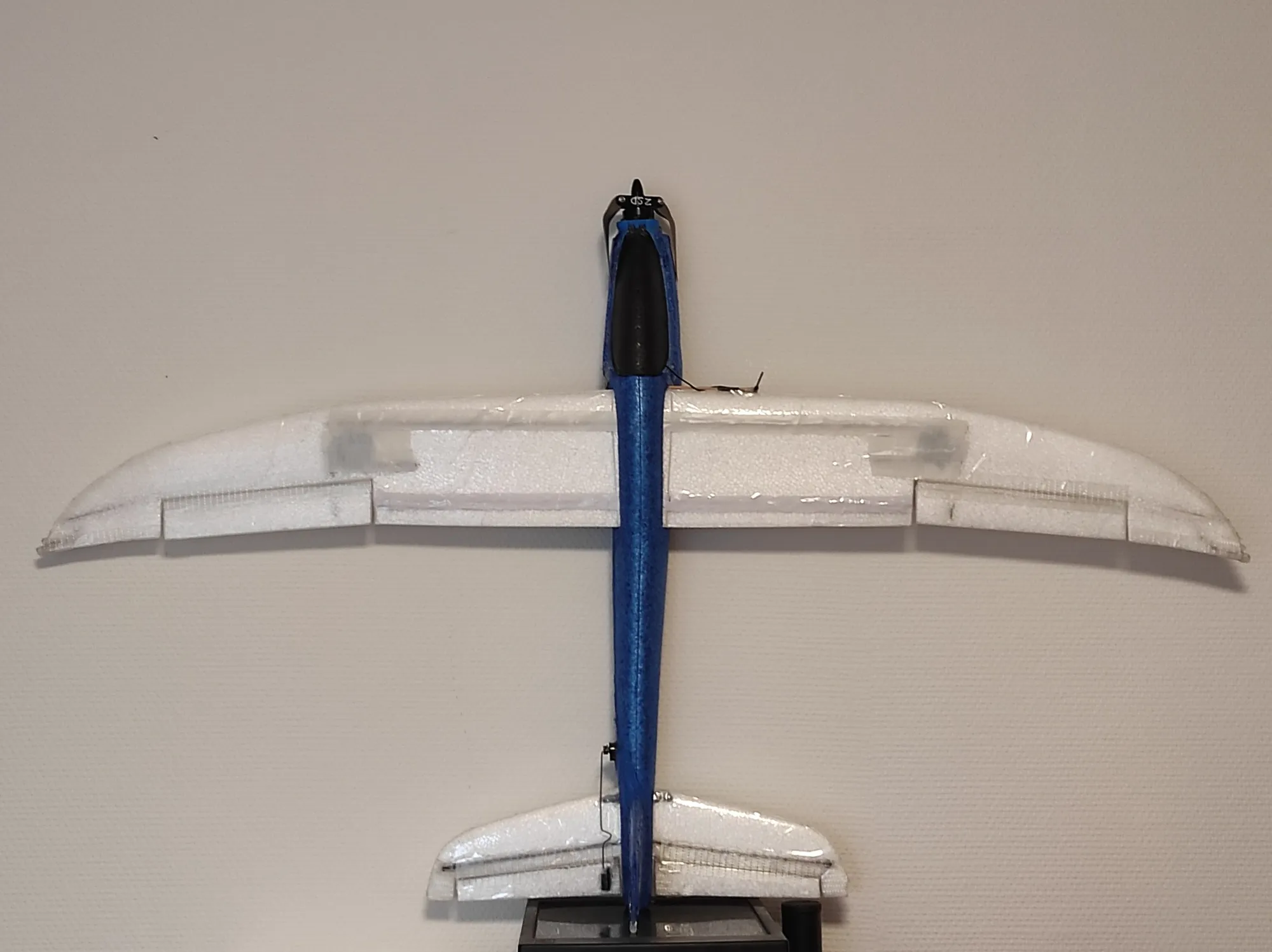
| Airframe | foam hand-launch glider, about 1 m span, carbon rods and glass-fibre mesh tape |
| Flight controller | Matek F411-WTE, INAV 7.1.2 |
| Motor | SunnySky X2204S 2300 KV, V-GOOD Airplane-32 Plus 20 A ESC |
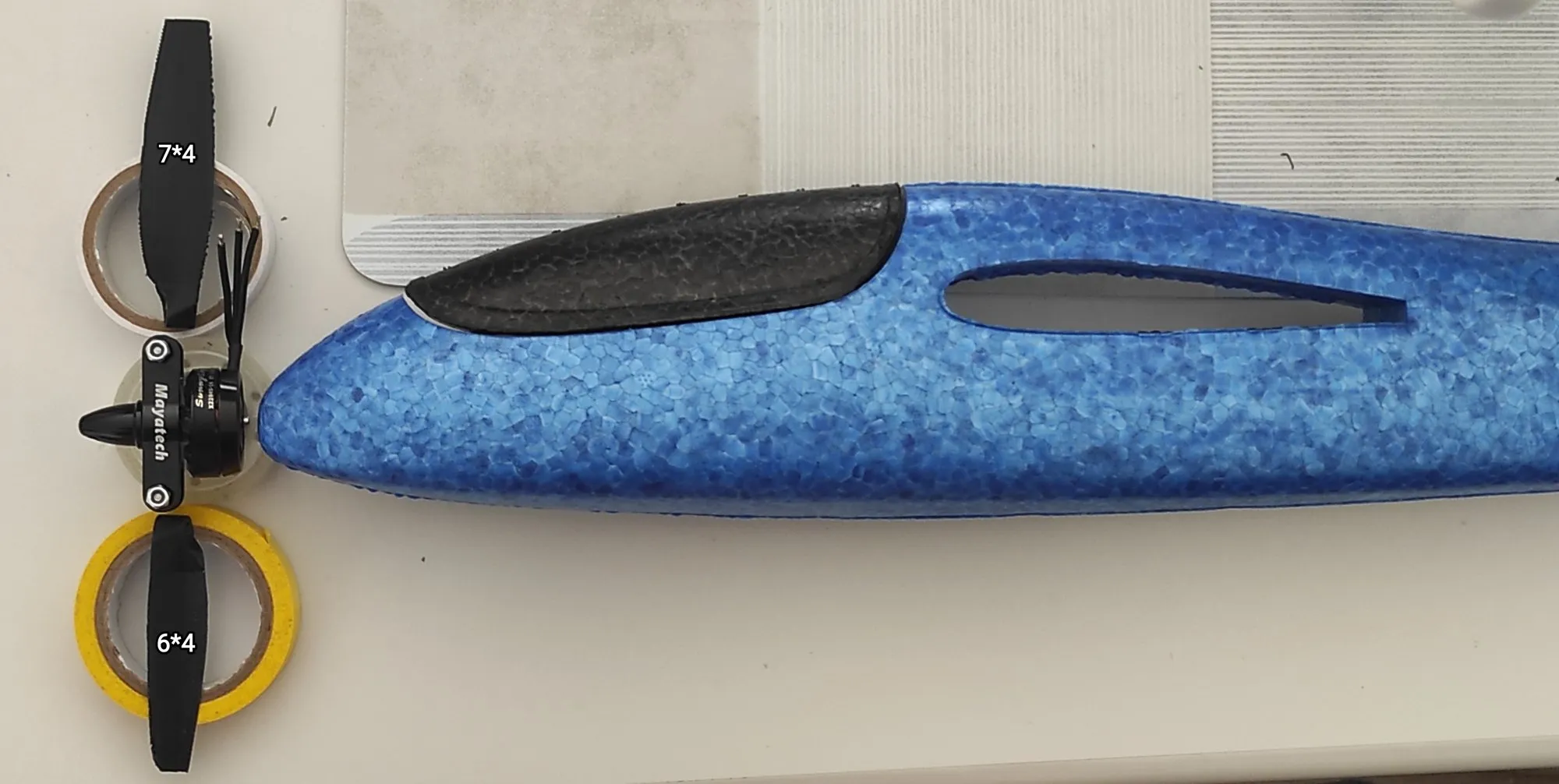
| Propeller | Gemfan moulded folding blades, later a three-blade; printed 6×4 inch blades on the bench only |
| Servos | MG90S on pitch and roll |
| GPS | Beitian BN-220 |
| Radio | RadioMaster Pocket, ExpressLRS with telemetry |
| Battery | 3S Li-ion, 2500 mAh, three Samsung INR18650-25R cells |
| Printed parts | electronics bay (125 × 54 × 51 mm), motor mounts, holders, control horns, blades |
| Flown | 8 and 30 August 2024, two fields |
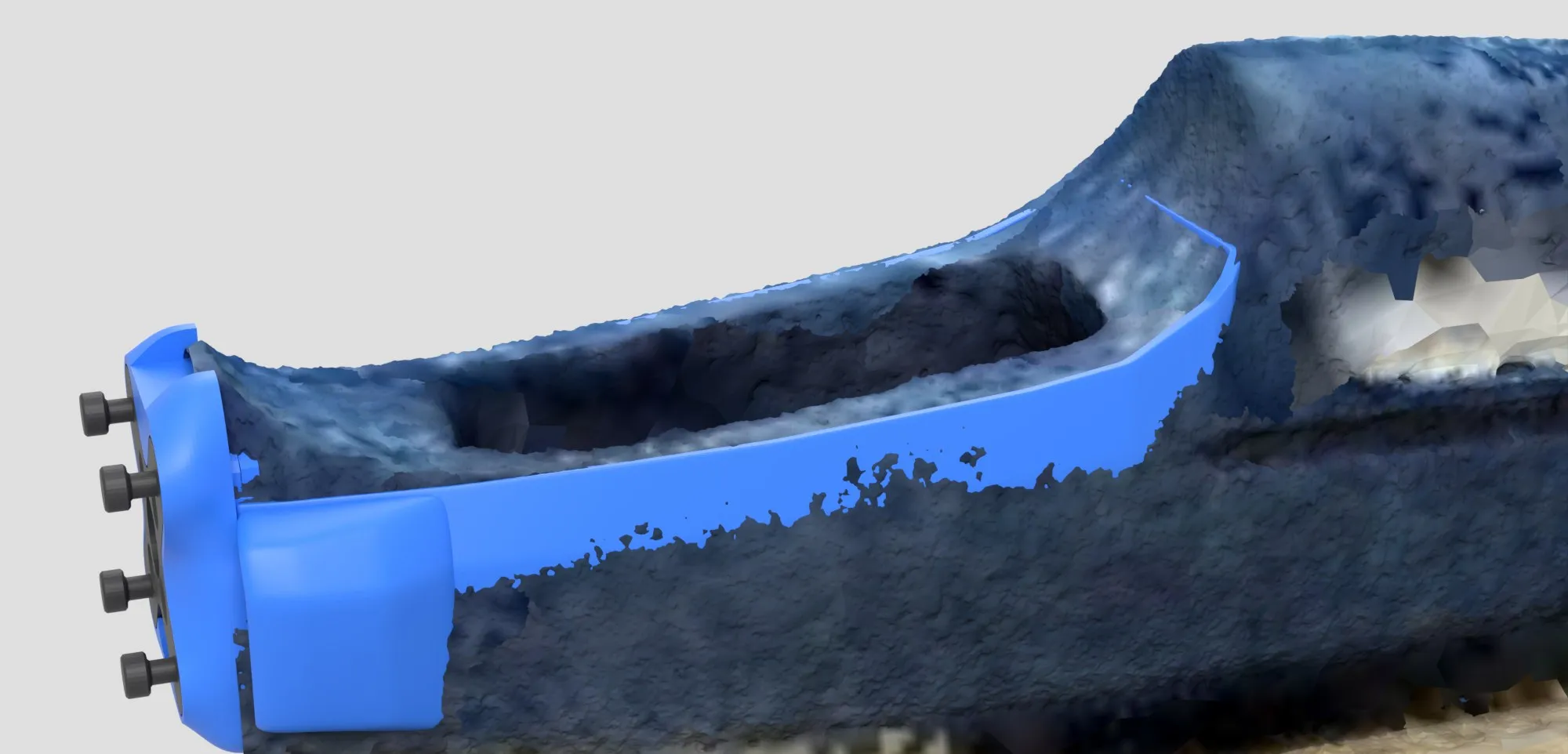
A foam hand-launch glider of about 1 m span that I rebuilt between April and August 2024 into a GPS-equipped aircraft running INAV. It carries a Matek F411-WTE flight controller that I wired from the bare board, a Beitian BN-220 GPS, and an ExpressLRS receiver whose link sends telemetry back to the transmitter. It runs on a 3S pack I built from 18650 cells, and its electronics bay was modelled in Blender inside a photogrammetry scan of the fuselage and printed on my own printer. I flew it at a club field on 8 August 2024, and it flew again at a second field on 30 August.
Motor and printed propeller blades, April 2024
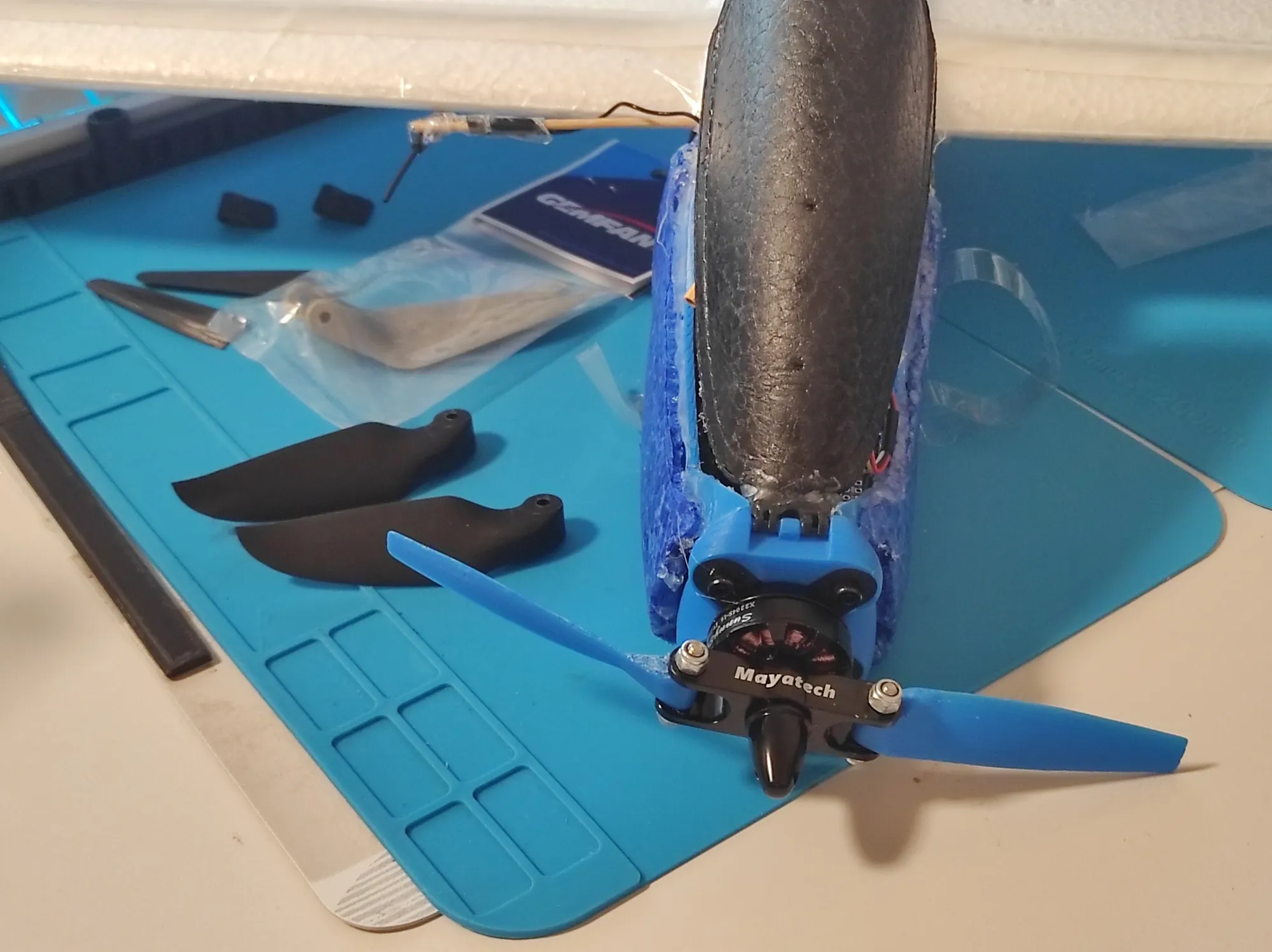
The propulsion came first: a V-GOOD 20 A ESC on 7 April 2024, then a SunnySky X2204S, 2300 KV, on a Mayatech folding-propeller hub. The control horns were printed on 9 April. For the blades I used Hamish Trolove’s parametric OpenSCAD generator for folding propellers (CC BY-SA) with a NACA 4412 section, generated 6×3, 7×4 and 6×4 versions, and settled on 6 inch diameter and 4 inch pitch, printed on 19 April.
Flight controller and a scan of the fuselage, May and June 2024
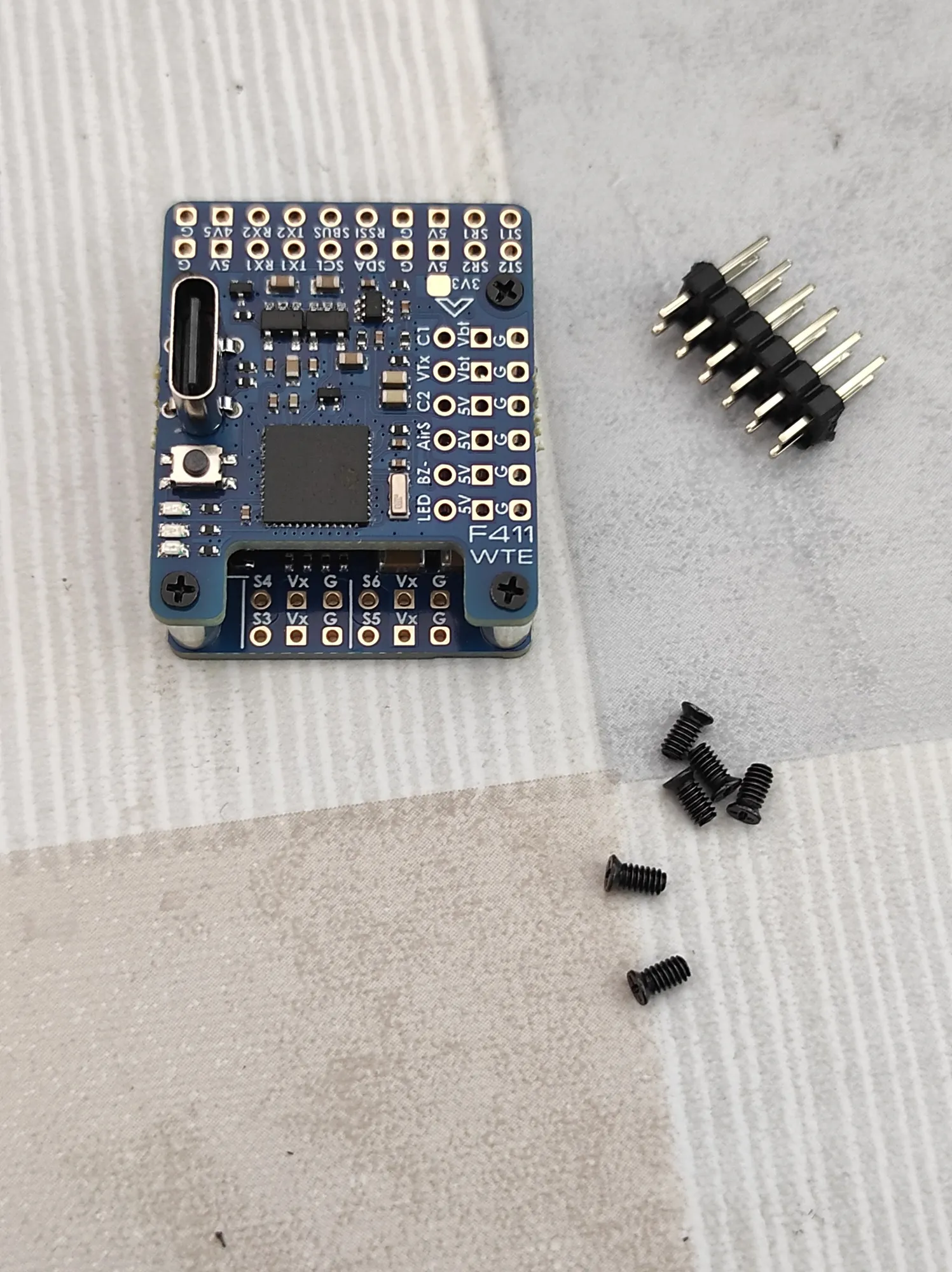
The Matek F411-WTE arrived on 2 May as a bare board with a loose strip of header pins.
On 7 May I scanned the glider with photogrammetry: 90 photos at 64 MP with a ruler in frame, reconstructed in Metashape into a textured mesh of about two million faces. A printed motor mount came off the printer the same afternoon. The first version of the electronics bay was modelled before the scan. The second, modelled after it and revised on 14 June and again before printing, sits in the same Blender file as the scan: a shell 125 × 54 × 51 mm that lines the fuselage under the original foam canopy, with the motor mount on its front plate.
Wiring, firmware and the printed bay, July 2024
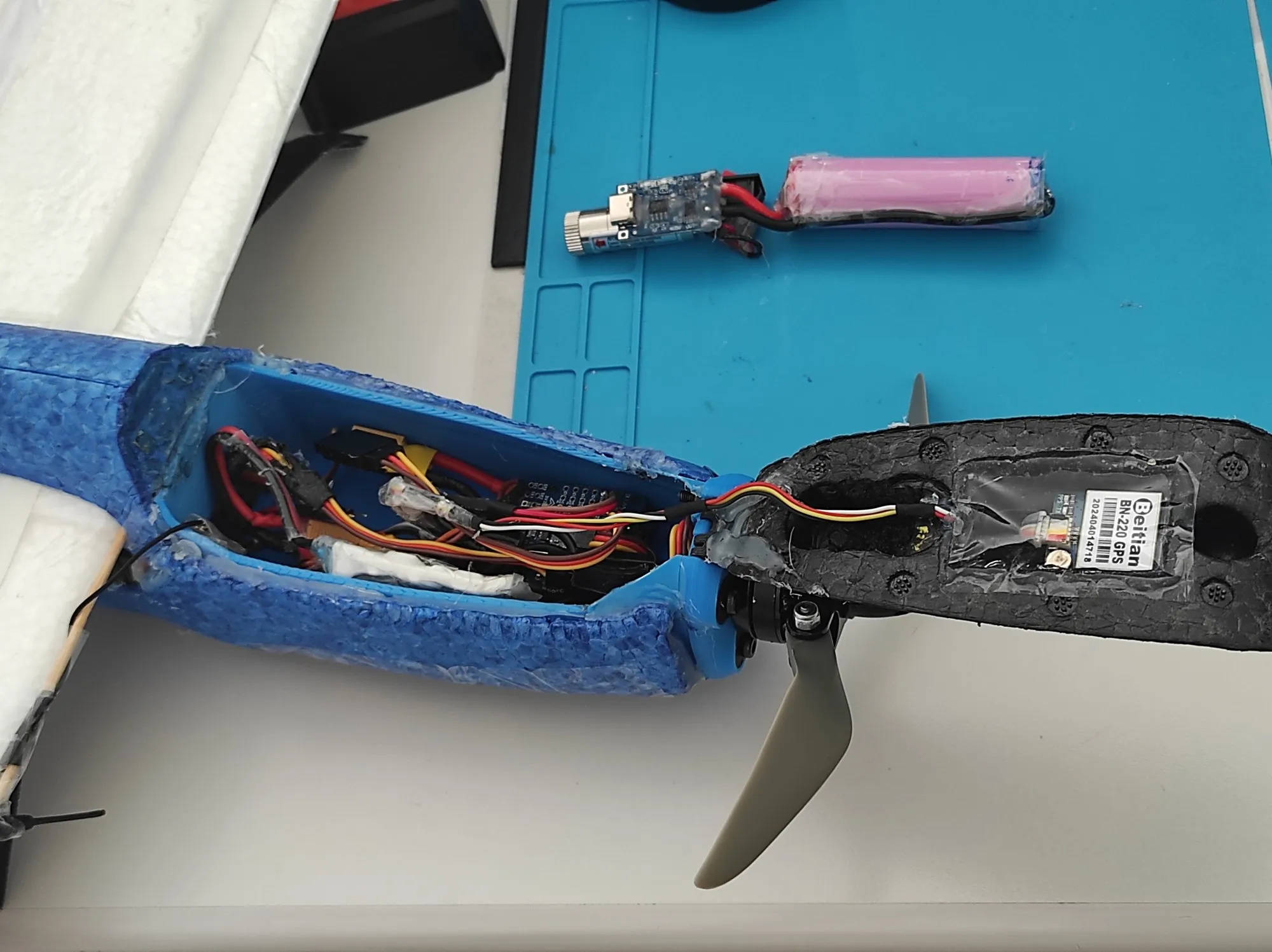
I soldered the ESC, the servos, the GPS and the receiver straight to the flight controller’s pads. On 16 July I flashed INAV 7.1.2 for the MATEKF411TE target and ran the board on the bench from a 3S pack I built from Samsung INR18650-25R cells.
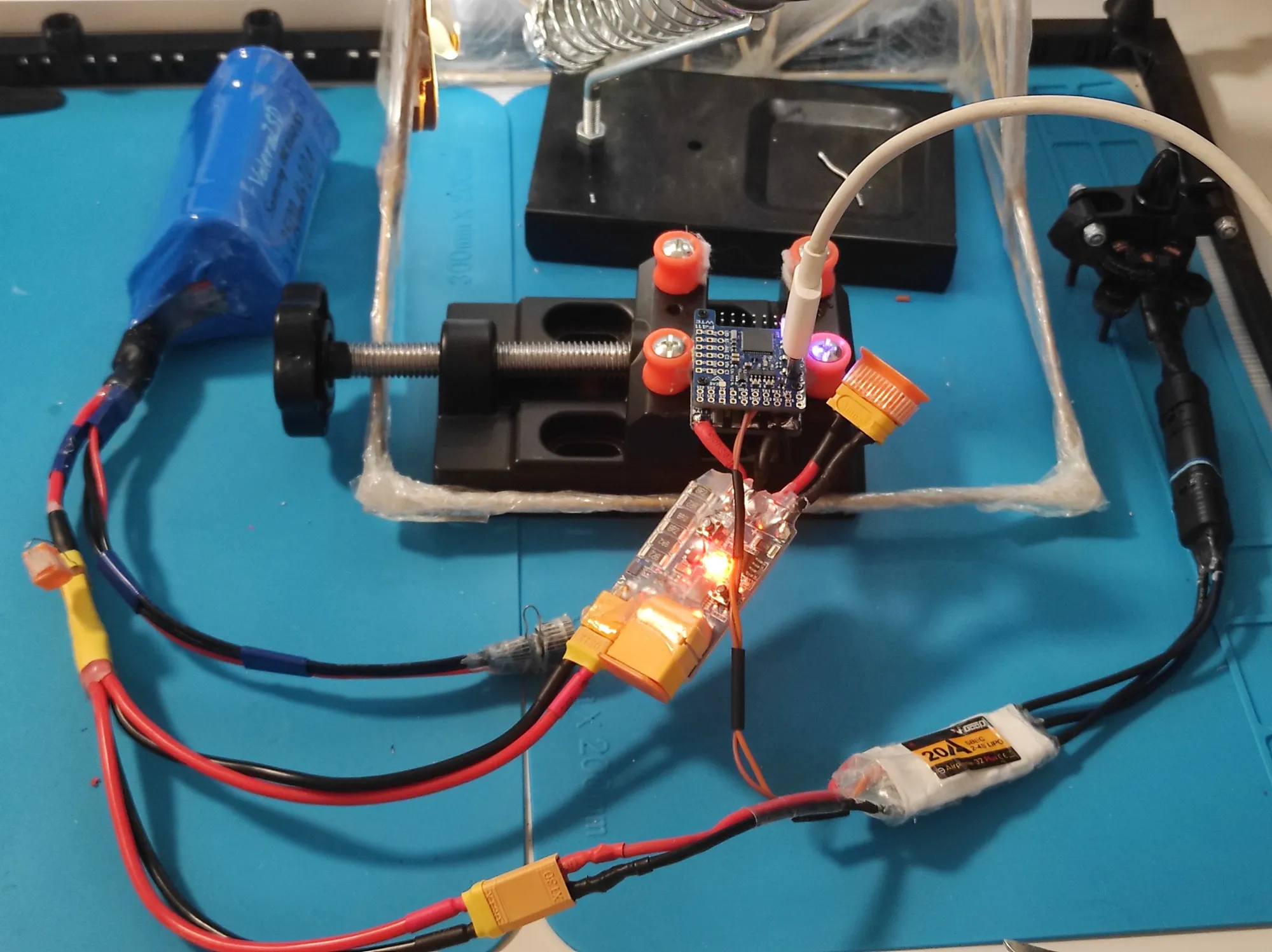
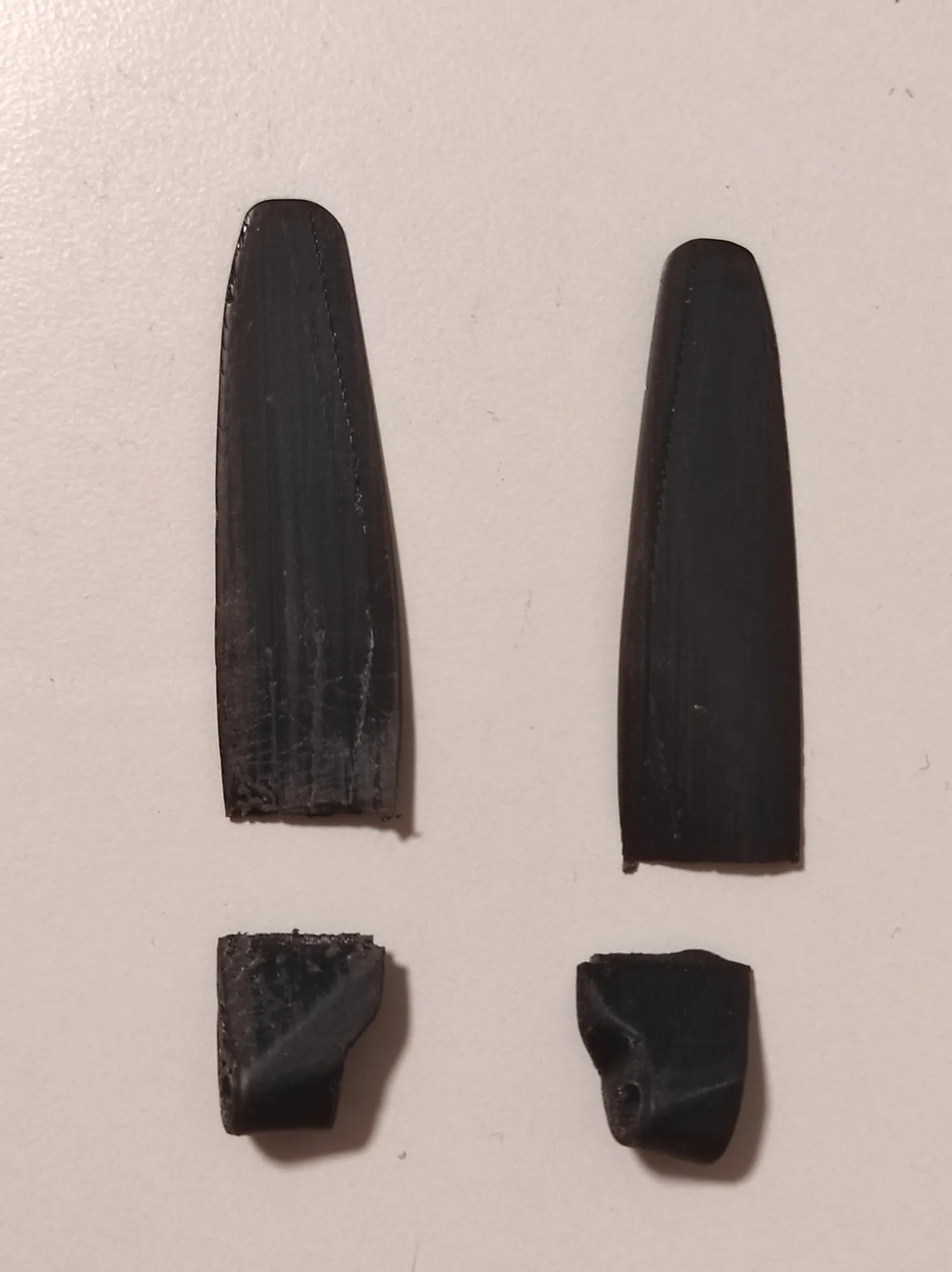
On the bench at high RPM the printed blades came apart; the first pair had broken by 16 July. The BN-220 went into the underside of the foam canopy on 17 July, and by 19 July the airframe was reinforced with carbon rods and glass-fibre mesh tape, with wiring run through the wing. Three LEDs make it visible in the evening. I reprinted the 6×4 blades on 30 July.
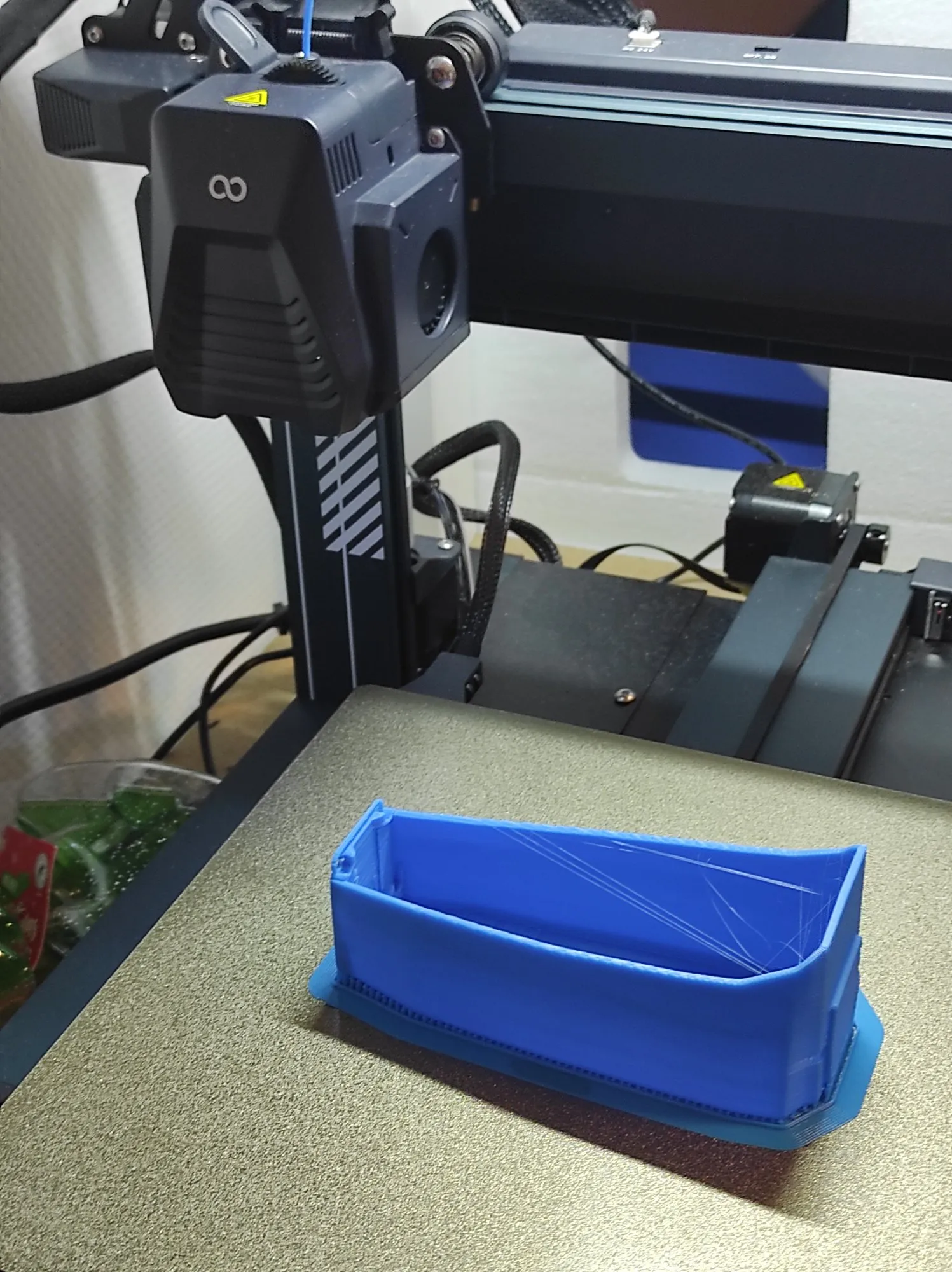
The bay was printed on the Neptune 4 on 31 July, with a battery holder; a holder for the canopy followed the next day.
Bench runs, the pack and new blades, early August 2024
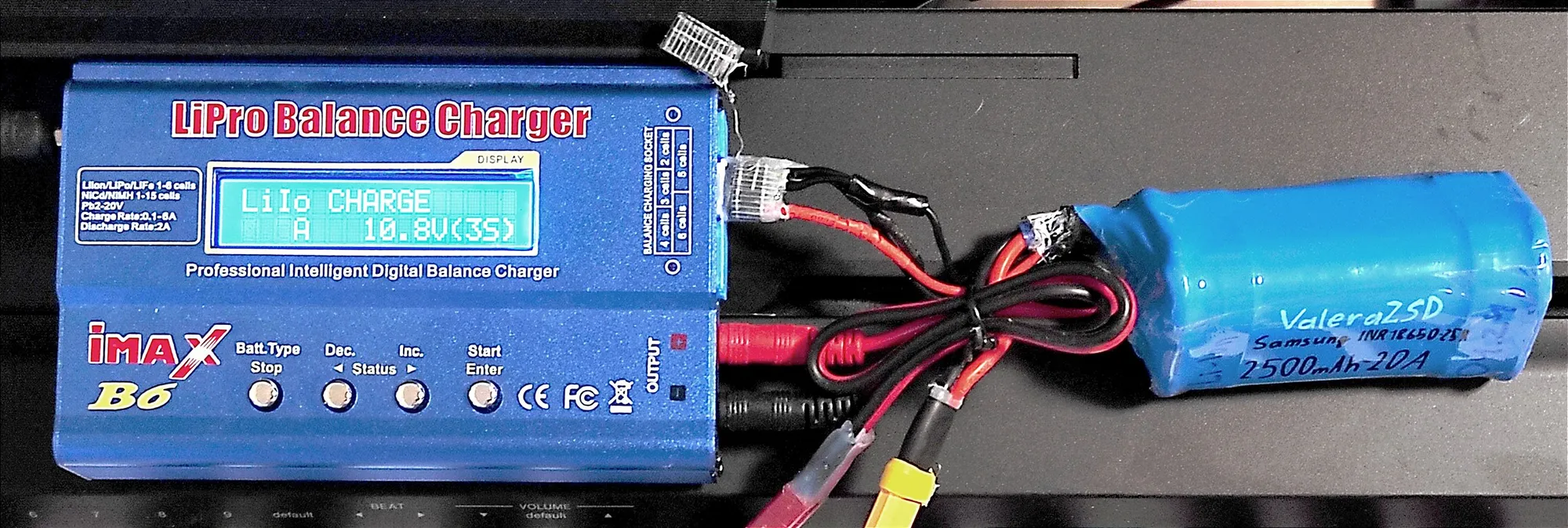
On 2 August the ESC went into the bay with XT60 leads and I ran the motor up with the flight controller on USB. On 3 August I checked in INAV Configurator that the model on screen followed the aircraft’s attitude, and the RadioMaster Pocket transmitter arrived the same day. I charge the pack in Li-ion mode on an iMAX B6.
Another printed pair broke at the root on 6 August. No printed blade ever flew: the aircraft flew on off-the-shelf moulded folding blades.
Flying and rework, August 2024
On 8 August 2024 I flew the aircraft at a club field on two linked transmitters: a more experienced club pilot held the second one, could take control at any moment, and flew it for a while too. The controls were stable, but with the carbon, the glass-fibre tape and the hot glue it was heavy for its wing and stalled when it flew too slowly.
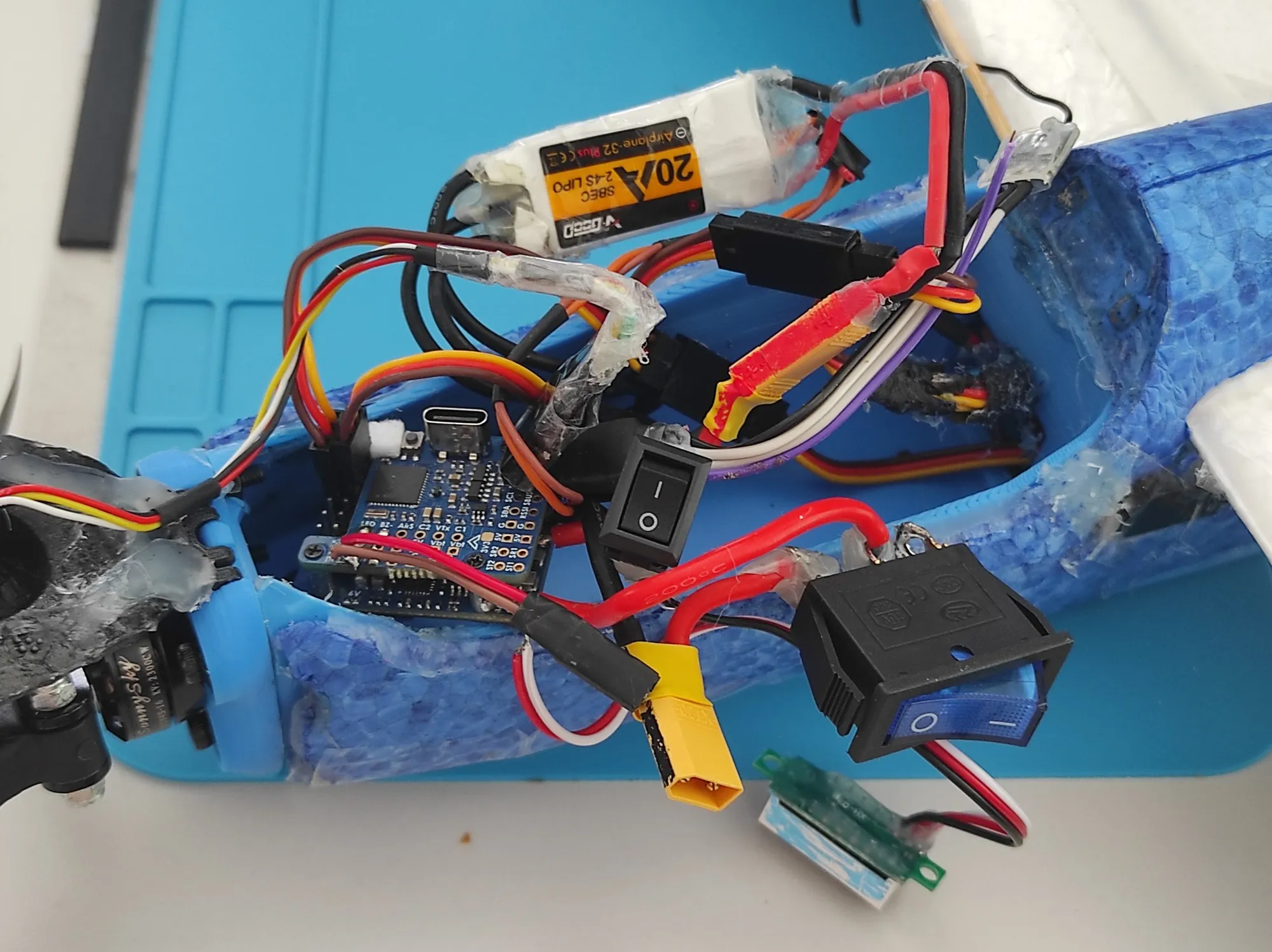
On 11 August I added a main rocker switch with an indicator lamp and a small voltmeter for the pack, and set up the ESC with its programming card.
The same weekend the Pocket got its own voice alerts, “Aircraft armed”, “Battery low” and “Entering failsafe mode”: I generated them with a text-to-speech script and converted them to the 16 kHz mono WAV files EdgeTX plays on those events.
In mid-August I joined the Dokkumer Modelvliegclub for the rest of that year.
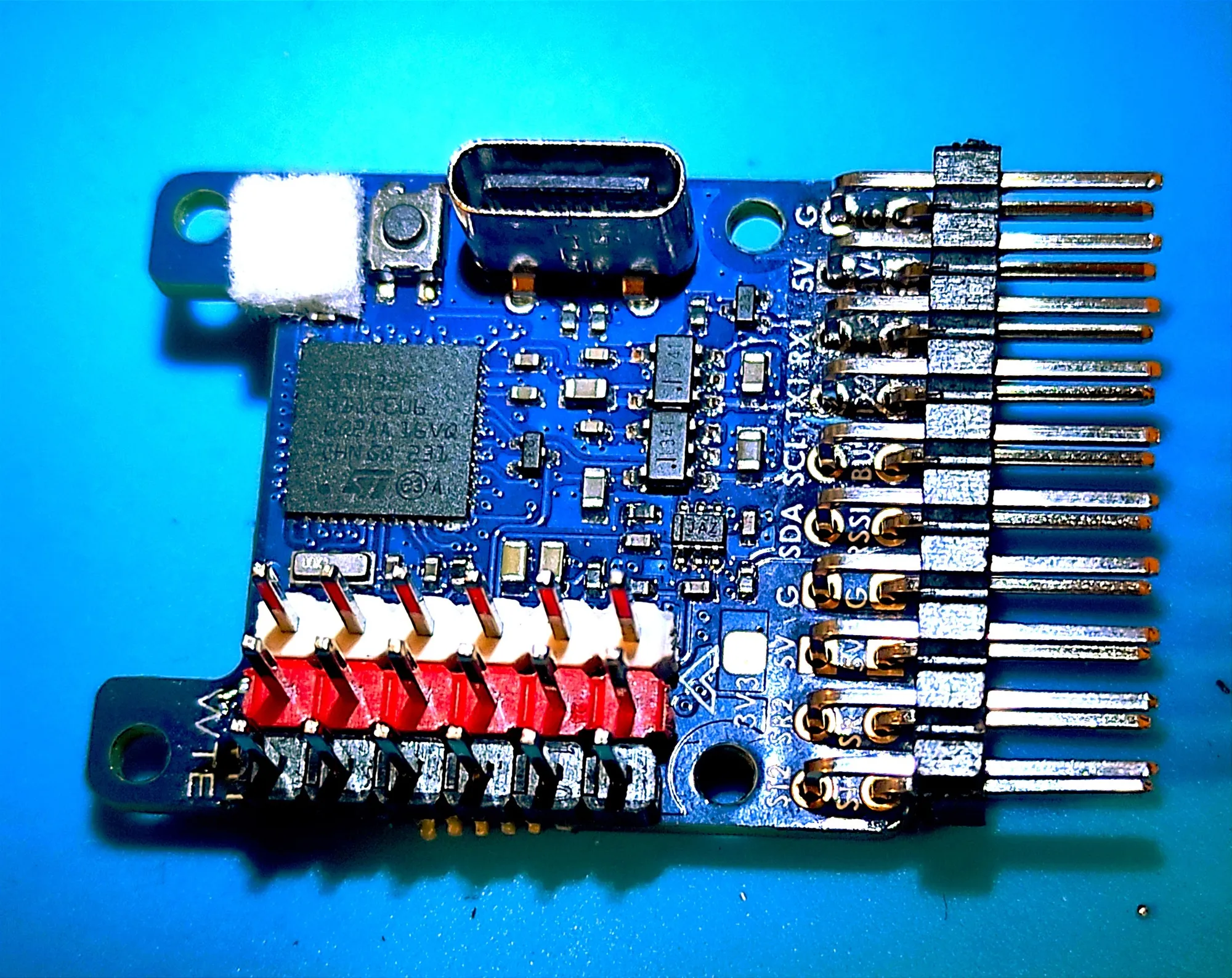
On 19 August the wires came off the flight controller and pin headers went on, so the servo leads and the serial devices plug in. On one flight the aircraft came down in the next field, and finding it in the tall grass took a long search, so on 20 August a VIFLY Finder 2 locator buzzer went in, together with a new printed nose mount.
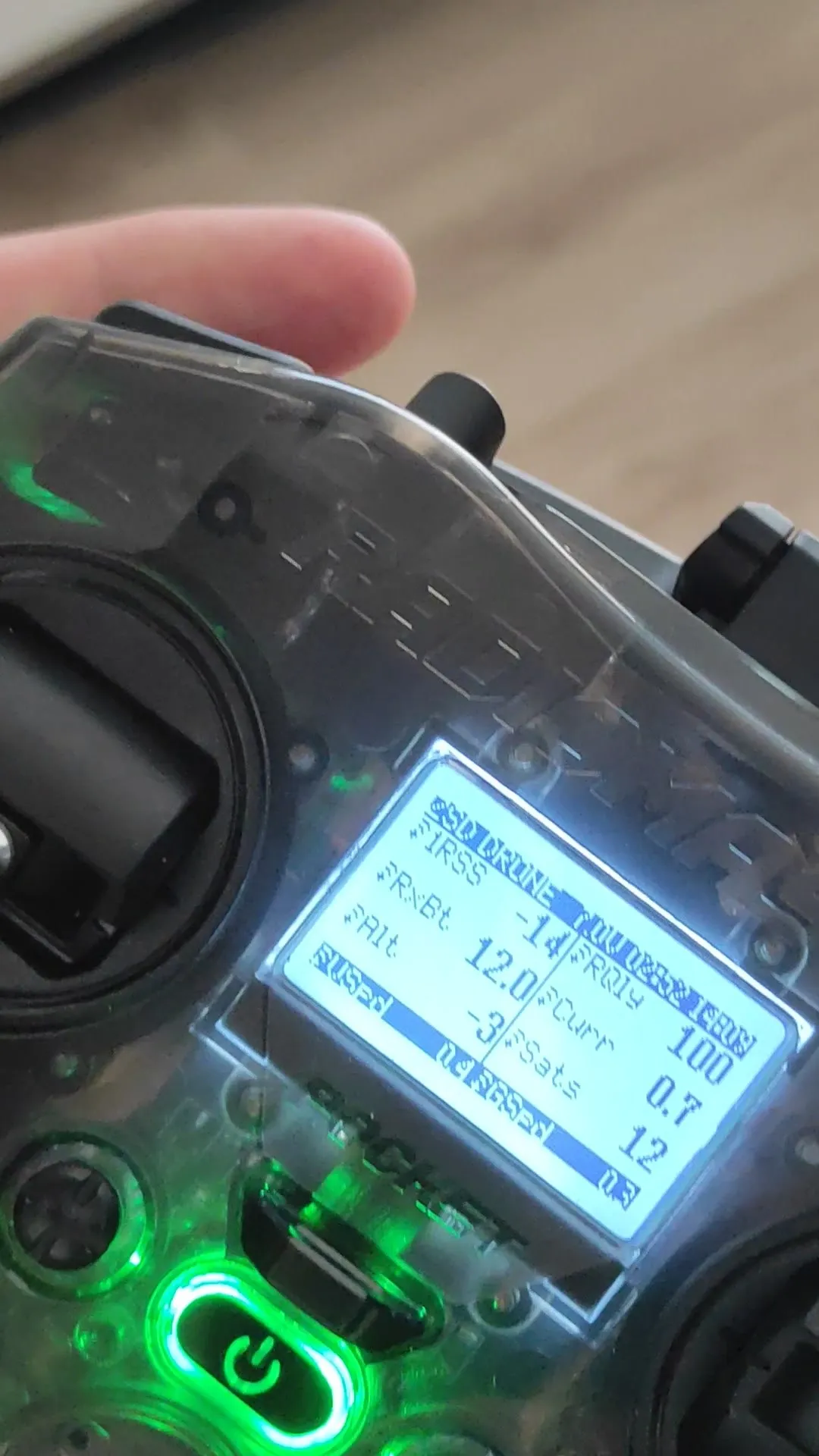
INAV sends its data down the ExpressLRS link and the Pocket shows it live; return-to-home is set as the failsafe on signal loss, and it never triggered: I never flew the aircraft far. On the bench on 28 August the screen read a link quality of 100, 12 GPS satellites, 12.0 V on the pack and 0.7 A of current.
On 30 August it flew at a second field, on a three-blade propeller.
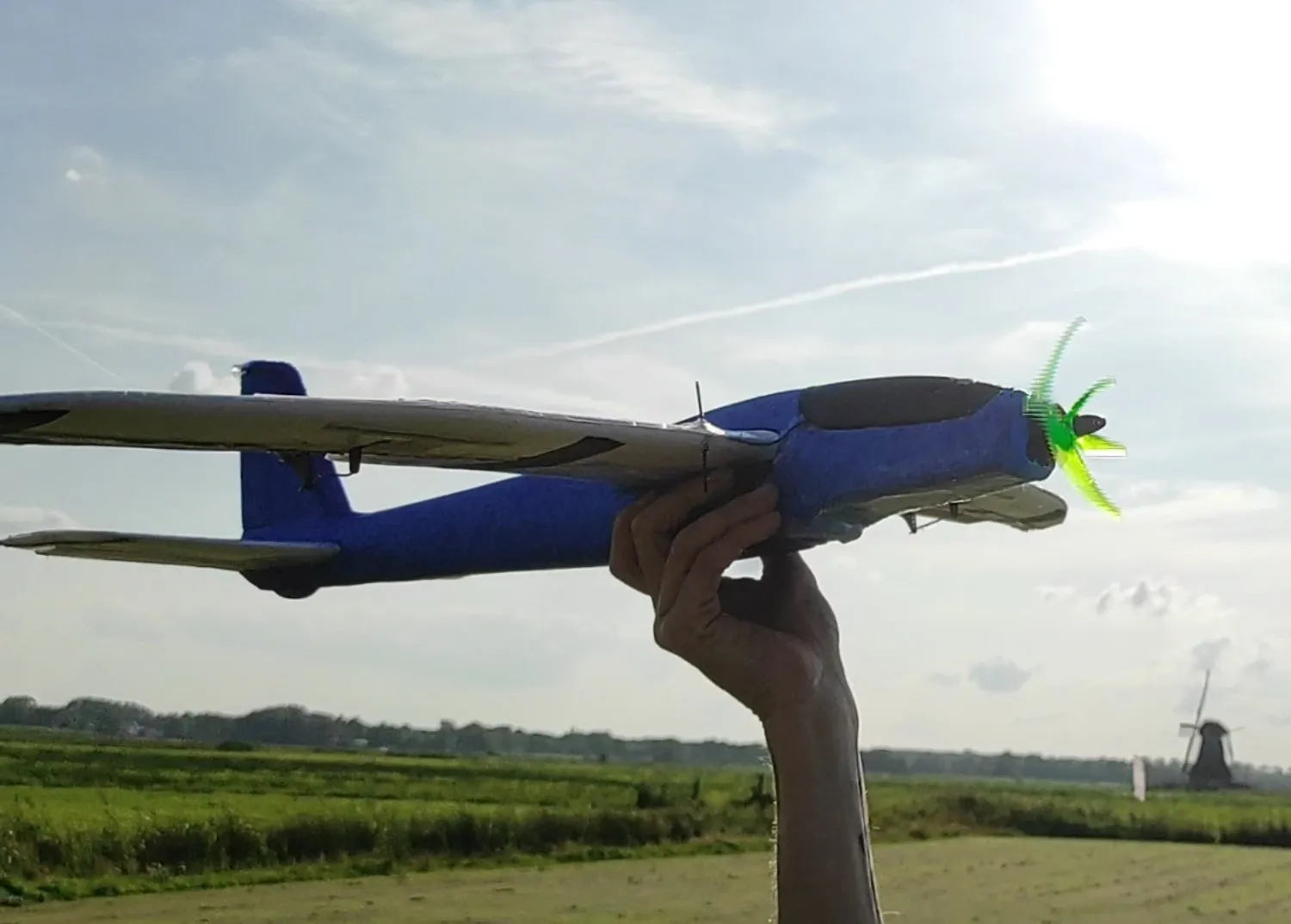
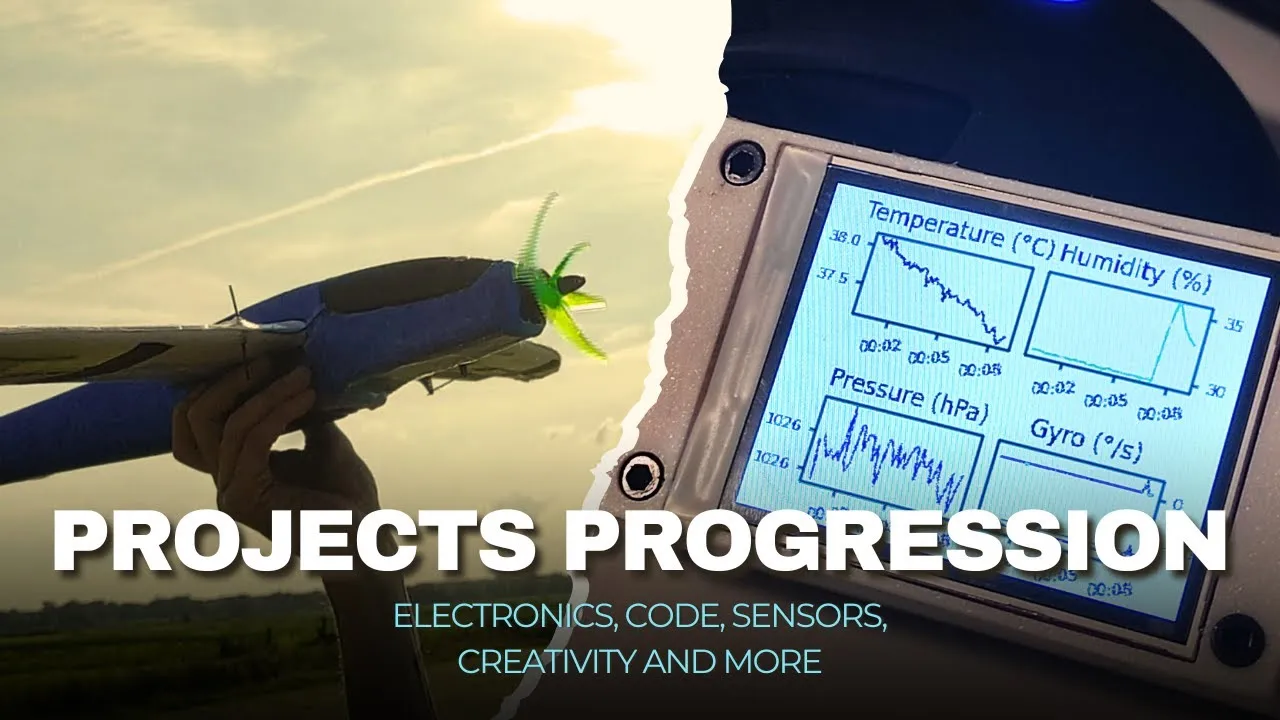 The aircraft, built and flying